Showing posts with label Hurricane. Show all posts

Thursday, August 9, 2018

After the storm: A view of a patch of forest in El Yunque rainforest, before and after hurricane Maria.


\

This is a view from the Iguaca Aviary, of a patch of forest 
in El Yunque rainforest, before hurricane Maria.


The same place, after Maria.

Monday, December 12, 2016

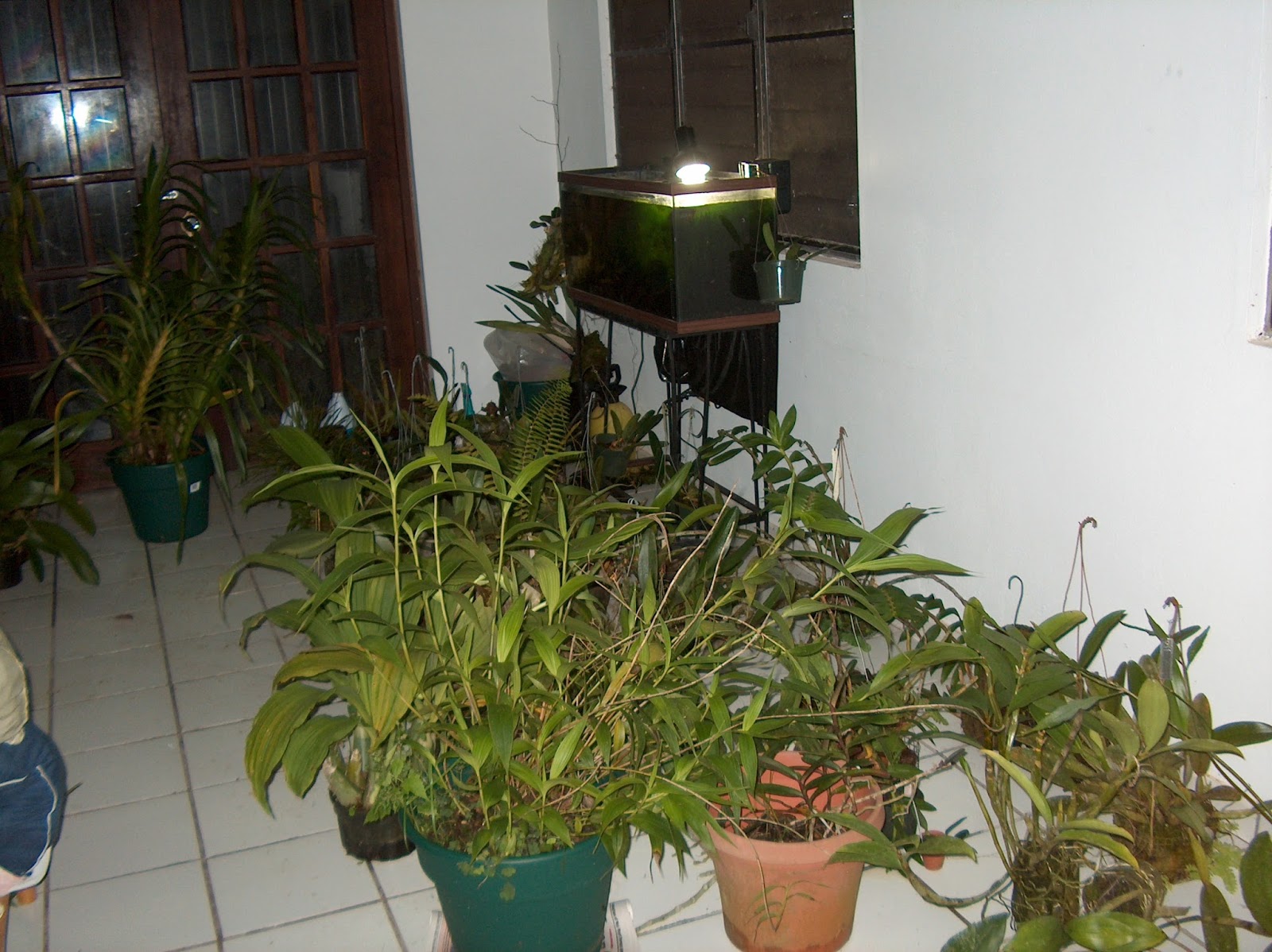
In 2004, I moved many of my orchids indoors because tropical storm Jeanne was menacing the island. It passed over Puerto Rico and went on to became the deadliest hurricane of 2004


In September of 2004 the island of Puerto Rico came under a tropical storm warning.  I was so concerned my plants would get damaged by the winds and falling branches, I moved a lot of them indoors.  The storm made landfall in the south east of the Island near Maunabo at midday September 15, it exited the Island through Mayaguez at 11 pm.  The strongest winds measured over the island were 117 km/h in San Juan, in the north of the island.  Rainfall fluctuated between 152mm and 610mm.  My location experience only light defoliation to the canopy, and very little damage to the houses.

The orchids I left outside were unharmed.  However, after I took the plants outside, I spend the next week finding frogs, spiders and cockroaches that had come in to the house hidden in the orchid pots.  It was the last time I brought such a large number of plants indoors.

Saturday, April 30, 2011

Hurricane Hugo, a few photos from the aftermath of Hurricane Hugo in 1989.


This tree was defoliated and stripped of most of its smaller branches.  In this particular area most trees sustaine extensive damage but remained standing.

In this area the trees were stripped clean of leaves and lianas and only the hard woody stems remained.  Unfortunately it is not easy to get a perspective in this photo this makes trees with substantial sized look like twigs.  To get an idea of the size look at the lower left corner of the photo were the remains of a palm frond can be seen.

In this area the wind were so fierce even the bark was stripped of some trees.  The top of this was ripped away by the wind.

Seven days after the hurricane some roads were still impassable due to the massive tree fall.

This part of the forest had faced the full brunt of the wild and the main color was that of the bare trunks and surviving braches of the trees.  Leaves which usually covered everything are nowhere in sight.

Forest damage over El Verde Station.


Shattered tree trunk

The entrance to the Caribbean National Forest, blocked by massive tree fall

Tree trunk sheared off 

Making the best of a bad situation some college students from El Verde Station go out to do some research.

These photos were taken seven days after Hurricane Hugo hit the northwest corner of the Island of Puerto Rico.  I was able to take them because Hector Colon invited me and Sandra Moya to see the damage inflicted by the hurricane to the forest of the area around El Yunque mountain, then know as the Caribbean National Forest.  We were shocked by the tremendous damage that the high wind inflicted to the forest.  In some parts it looked like someone had bombed the forest.  Bird mortality was high, as I recall half of all the Puerto Rican parrots in the forest perished as a result of the hurricane.  Other species were similarly affected. We traveled around the El Verde area.  We narrowly avoided being in the middle of a shoot out between cars that left several cars riddled with bullets by the side of the Espiritu Santo river bridge.  We were unnerved because we heard the shooting from the spot we were inside the forest a few hundred feet away from the bridge.  Although in some parts of the forest the damage was severe, in some sheltered parts the forest suffered much less damage.  But huge parts of the forest were defoliated in a way that I had never thought possible.  I took these photos and forgot about them for decades.  Due to poor storage they degraded considerably and some became damaged.  But even in their decay they give a powerful testimony of the awesome and frightful power of a tropical cyclone.