|
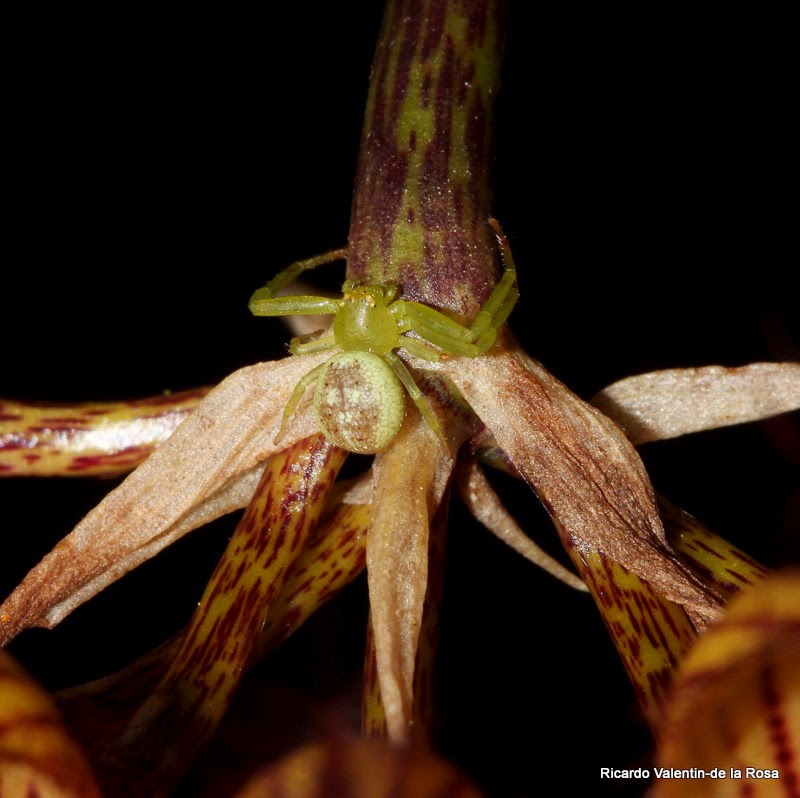
Do you want a hug? Seem to say this crab spider
sitting on top of a Bulbophyllum flower lip. |
 |
| You can see the spider sitting on the lip of the flower |
 |
When the spider would go away from the lip
the fly would move to it. |
 |
| The spider tries to hide from me. |
 |
| A fly, not the fly in the previous photos, became dinner. |
Yesterday I noticed that a Bulbophyllum inflorescence had become a
focus of fly activity. I decided to take
a few photos but instead of the usual 18 to 55 mm zoom lens I use, I decided to
try to see if I would be able to get some decent shots using my 100mm macro
lens. This macro lens is wonderful to
take photos of still subjects such as orchid flowers but a real nightmare to
use with subjects that keep moving even if they only move a few millimeters
when you are focusing.
To my surprise the fly that was
over one of the leaves of the orchid was strangely indifferent to my presence. Yes, it would fly away if I got too close,
only to return quickly if I retreated a bit.
I was able to get within a few inches of the fly and take the closest
macro shots of a fly I have ever gotten.
I wondered whether the brain of the fly was somehow addled by the scent
of the flower but what happened the next day disproved that theory.
In the morning, a fly, maybe the
same one, was sitting on the flowers.
But there was a new visitor on the flowers. It seems I was not the only one to notice
that flies were being attracted to the flowers.
A small green crab spider had taken residence on one of the
flowers. The fly seemed aware of the
presence of the spider as it would not go near it. When I started taking photos of spider, it
became agitated and ran away. It tried to hide in the base of the
inflorescence. I decided to leave the
spider alone for a while. The fly, when
the spider had retreated, went all over the place where the spider had
been. I could see the spider was
watching the fly, which was much larger than the spider, the fly activity was
probably a very powerful lure to the spider to return to the flower.
Several times I came near the
spider with the camera and every time the spider retreated to the perceived
safety of the inflorescence. But in the
end, the spider decided to (metaphorically of course) grit its teeth and tolerate
my presence. The spider would sit on top
of the lip of the orchid with its front legs outstretched, ready to grab any
insect foolhardy enough to come close.
The theory that the fly was somehow befuddled by the orchid fragrance
was disproved by the fierce way the fly would attack any other fly that would come
close to the flowers. I saw it confront aggressively
and chase away, two other flies that alighted on the flowers. In a
perverse way, the strong allure that the flowers had for this fly was
preventing them from being pollinated.
The large black fly had the wrong weight to properly activate the hinged
mechanism of the orchid lip that ensured that the fly received the pollen. The fly was fiercely preventing any fly of the
appropriate size to affect pollination from sitting on the lip of the flowers. So paradoxically even thought the flowers were
surrounded by flies but not one flower had lost its pollinia or had been
pollinated.
By the afternoon the flies had
left and the spider remained sitting on the flower. At 5:30 pm I went to take a look and
discovered that the spider had been successful in catching a fly, just not the
big flies that were around the flower in the morning. I wonder if the spider will be there
tomorrow, the flowers are getting close to senescence and will probably last only
two or three more days. Tomorrow I will
again look to see if a new drama of manipulation, desire and grisly death plays
itself out in the flowers.