Showing posts with label Calanthe. Show all posts

Monday, November 21, 2016

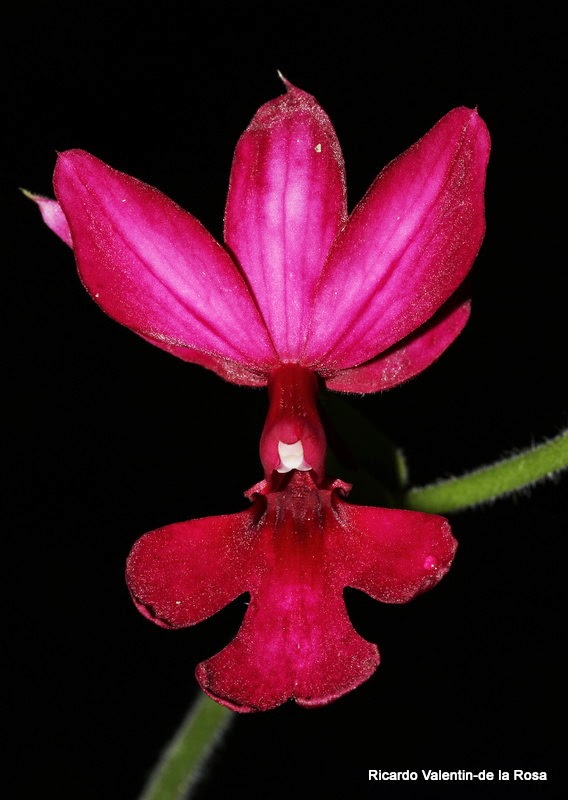
Calanthe rubens Ridl. 1890


I used to grow many plants of Calanthe rubens.  They would put a beautiful show in early winter.  However eventually I gave all my plants away.  Mainly because I acquired larger, showier hybrids that would bloom for a longer time.  However I still remember them fondly there were they first Calanthe I ever cultivated and they would bloom very well with little care.

Thursday, January 29, 2015

Calanthe Vintage Wine 'Mendenhall' x Calanthe Rozel 'Red Velvet, first blooming

This is the first blooming of this hybrid for me.  The flowers are a lovely shade of red.  For some reason the plants have not grown as well as I had hoped.  However I plan to move them to a sunnier spot and see what happens.

Add caption

Tuesday, January 13, 2015

Calanthe (Vintage Wine 'Mendenhall' x Rozel 'Red Velvet) frist bloom


First bloom to open in my garden of this Calanthe hybrid.  I like the color.  The plants are very easy to cultivate but few people in Puerto Rico culture them.  

Monday, December 9, 2013

Phaiocalanthe Kryptonite 'Chariot of Fire'


This orchid is easy to grow as well as floriferous.  Sadly, I neglected it.  What was my error?  I failed to repot it onto fresh media.  This has to be done to these plants where I live or they will deteriorate and stop blooming.  I replanted this orchid this year but its recuperation has been slow.  I expect it to start blooming again next year.

Sunday, December 1, 2013

Phaiocalanthe Kryptonite, a white clone


When the first Phaiocalanthe Kryptonite plans came into the market, almost all of them produced white flowers when they bloomed.  Finding a red one was almost impossible.  Then the red clones became all the rage.  Nowadays clones with interesting patterns in the flowers are the ones that seem to be most popular.  Unfortunately I lost this one when weeds invaded the pot and killed the plant.

Phaiocalanthe Charlie Khlem, a cream-yellow clone, sadly lost


This one was a vigorous plant and easy to grow, sadly it was lost to rot during a spell of extremely wet weather.

Phaiocalanthe Charlie Khlem, an unnamed clone


I got this plant as a seedling many years ago.  It is quite different from the Phaiocal. Charlie Khlem clones that were available for sale years ago.  It has the virture that it is almost indestructible and blooms consistently with a minimum of care.  This plant has the particularity that flower that develop under hot weather have much less color than those that develop under cooler conditions.

Friday, November 22, 2013

Calanthe rubens Ridl. 1890, a deciduous terrestrial orchid


This Calanthe is probably one of the easiest terrestrial orchids that you can grow in Puerto Rico.  All it needs is to be repotted once a year on fresh media and regular watering.  Many years ago I was given a small rootless piece by a friend.  I had never grown a Calanthe so I gave particular attention to the plant.   The plant thrived and next year it bloomed.  When it was two years old I divided it.  This gave me two plants.  Next year I divided them again and then had four.  I repeated the process a few times until I had more plants than I really wanted.  I gave a few of them away.


Since all my plants were a single clone, they bloomed all at the same time.  I would group them all together and for months I would enjoy the massed display of flowers.   When the inflorescences would cease to produce flowers, I would cut them and repot the plants.  I did this for a number of years, but then I began to get lazy.  I neglected them and they started doing poorly.  However they kept flowering although with less vigor.  Unfortunately, I lost this orchid.  The culprit was a black rot that attacked the bulbs.    For those orchid growers that live in a tropical setting this small Calanthe is a good option.   One would think that given the ease of culturing this plant it would be common in local orchid collections, but the reverse is true.  Very, very few people grow Calanthe in Puerto Rico.    I think the main reason is that most people are unfamiliar with this genus and that sources that sell these plants are few and far between.  

Tuesday, November 23, 2010

Phaiocalanthe varieties, the sadness of being spurned for being easy

A white lipped variant of Phaiocalanthe Kryptonite

Phaiocalanthe Kryptonite 'Ursula'

Phaiocalanthe looks particularly good when shown in groups

A white form of Phaio. Kryptonite, for a time it used to be the most commonly available color

A group of white Phaio. Krytonite with inflorescences growing toward the light

A yellow clone of Phaio. Charlie Khlem

Pastel pink Phaio. Charlie Khlem, the intensity of color of the flowers seems to be greatly influenced by temperature.  In my location warmer temperatures means lighter colored flowers.

When grown in a place where the light shines on them evenly from all directions the inflorescences grow straight up
A bicolored Phaio. Charlie Khlem

The previous flower, freshly opened

A select clone of Phaio. Charlie Khlem

A group of Phaiocalanthes and Calanthes

Pity the poor Phaiocalanthe, it is burdened by the lack of those things that most attract orchidists.  It is not rare, it won’t take 10 years to bloom, the flowers are not ugly, contorted, or weirdly bizarre.   It has a sad tendency to resist dying if slightly neglected and a bit larger than normal variations in temperature won’t cause it to defoliate and depart for that great terracotta pot in the sky.    The lack of all the things previously listed means that Phaiocalanthe is generally less valued than other orchids that are the source of much confusion and handwringing among orchidist.  But if you value pretty flowers that demand only a modest amount of care, Phaiocalanthe has much to offer.  Here I show a selection of the varieties I have cultivated.  All were cultured the same, you can read about their culture in this same blog under the description of the culture of Phaiocalanthe Kriptonite ‘Ursula’.

Monday, November 22, 2010

Calanthe rubens and Cal. Grouville two terrestrial orchids that are relatively easy to culture

Calanthe Grouville a hybrid

Calanthe inflorescences cascading from my terrace

Here you can see the way the flowers of Calanthe Grouville change color in my garden

A large plant of Calanthe Grouville with inflorescence

Calanthe Grouville plant with inflorescences that have been blooming for months

Plants ready for repotting, you can see the new buds at the base of the pseudobulb, for more details see text

This pesudobulb has two developing buds
Calanthe rubens

A mass of Cal. rubens inflorescences

Here you can see the shape of the Cal. rubens pseudobulbs

From what I have read about the start of the orchid hobby in England in the nineteen century, it seems the genus Calanthe was widely grown and much admired. In fact the first orchid hybrid to bloom, although not the first one ever made, was Calanthe Dominyi (Cal. masuca x Cal. furcata). Nowadays Calanthe has become rare in the orchid market although it still possible to find hybrids and species if one searches for them hard enough. But in Puerto Rico Calanthe has never been a popular genus and most orchidists are unfamiliar with even the most common species. I will detail my own experiences with this genus and why I think it is not favored among local growers.


The genus Calanthe has two group of species, the evergreen and the deciduous ones. General guidelines for the culture of both groups are similar in some respects but their biology also makes up for some major and striking differences. I have never grown evergreen Calanthe and I have never seen them shown in local orchid shows so I cannot comment about them. Those evergreen species I know from the literature hail from temperate climates and probably would die if kept at the tropical temperatures of the island of Puerto Rico.


My experience growing Calanthe has been with a deciduous tropical species and a hybrid of the same type. The species is Cal. rubens, the hybrid is Cal. Grouville. Calanthe rubens produces small pink flowers over a period of a few weeks in an erect inflorescence. Calanthe Grouville produces flowers that are somewhat larger than those of the preceding species and that are white and red. I my locality, and I don’t know if this is true elsewhere, the flowers of Calanthe Grouville start turning pink as they age. The flowers of Cal. Grouville open over a period of months on a single inflorescence that arises from the base of the pseudobulb.


Let’s start with the species, Cal. rubens. I suspect that the seasonal growing and resting cycle of this species is probably the source of confusion and frustration to orchid growers whose whole experience growing orchids is circumscribed to growing ephyphitic orchids such as Cattleya, Dendrobium and Phalaenopsis. The reason for the confusion is that for part of the yearly cycle of this species the plant discards both its leaves and the root system. The pleated leaves that looked so elegant earlier in the year start to deteriorate as soon as the inflorescence becomes close to blooming and become yellow and fall just as the first flower is opening. This seems to be a source of distress for those orchids growers unfamiliar with this plant and some assume the plant is sick and is going to die. The fact that the leaves of Calanthe tend to look awful and the end of the growing cycle, even before they are shed is also something that doesn’t endear it to growers that prefer clean and immaculate leaves on their plants.


Cal. rubens blooms at the start of the year in my garden, plants bloom between January and February. In this stage of their yearly cycle they are normally composed of an older pseudobulb and the current year’s growth with a single inflorescence arising from the base of the newer pseudobulb. The plant has neither leaves nor roots and the pseudobulb supplies all the needs of the inflorescence. At this time I water my plants but the plants seem to survive equally well with no water at all. I water them to avoid having the pseudobulbs become too withered. When blooming is getting close to finishing a rapidly growing bud will appear at the base of the newest pseudobulb. This is the signal I use to repot the plants. I take the plants out of the pots, I trim the old dead roots but leave the base of the roots still attached to the pseudobulb to help anchor the plant in the new potting media.


The plant should be repotted just as the new growth starts developing its roots. I tend to repot at an earlier time when the new growth is pretty small but I do this mainly because I have on occasion damaged the new growths when I have waited too much to repot them and they are quite large. I have used several types of media such as potting soil, peat, compost, sand and I have not noted much difference in the growth response of my plants. However there are two things that seem to have a great influence on the growth rate of the plants. First is the inclusion of manure in the potting media. If the media is around 1/3 manure the plants do much better. You might want to ask, Isn’t that a lot of manure on the media? The answer is, yes, but that what works for me. Second if the media is loose and easily penetrated by the roots the plants grow more vigorously. Calanthe in compacted hard to penetrate media produce smaller root systems and stay smaller than those grown in fluffier media. When the plants are in full growth mode I give them daily watering and in those cases when I have a large pot full of pseudobulbs I will even go so far as to put a water dish under the pot to ensure that there is enough water to sustain their rapid rate of growth.


I divide my plants every time I repot them, Calanthe is one of the few orchid genera where a single pseudobulb can produce a new full sized new pseudobulb without the back up of older bulbs. Depending on my mood I might plant them one bulb to a pot, two or even a dozen in a single pot. If they receive the proper level of light and watering they will do well in any number of combinations. I don’t give them the water soluble fertilizer when I water them since the manure in the potting mix takes care of their fertilizer needs for the whole growing season.


My plants produce their growths during the summer when local temperatures can climb into the nineties and it rains almost daily. They bloom in the colder and drier part of the year when a whole month can go without significant rain.


They get full sun most of the morning and shade from 11:00 am on. Exposure to too strong sunlight burns the leaves and leaves them covered with bleached yellowish areas and dead spots. But plants grown in the shade are weaker and bloom poorly. It takes a bit of experimenting to determine which exposure best suits the plants in your location. I try to achieve the elusive slightly yellowish and yet not covered with dead spots areas that brings the best blooming results in my area.


I treat my Calanthe Grouville the same way as Cal. rubens but since the pseudobulbs are much large I make allowances for a larger adult size. Cal. Grouville can form large avocado sized pseudobulbs and produces beautiful pleated leaves. It grows enthusiastically under tropical conditions and sometimes produces two growths at the same time from a single pseudobulb. Its inflorescences can get much larger than those of rubens reaching a meter or more. It produces its relatively short lived flowers in sequence as the inflorescence elongates. The inflorescence can have one to three flowers at a time. My personal problem with Cal. Grouville stemmed from its proclivity to proliferate at a furious pace if given good care. Since every year the number of pseudobulbs duplicate I found myself with dozens of plants. Because these plants are not small, finding a place to put them became a chore. I recall one year that I had so many that I gave every member of my orchid society a pseudobulb to plant and grow.


Cal. Grouville can stay in bloom for months but the inflorescence is at its most beautiful when it is opening its first few flowers. Afterwards it becomes leggy, in some cases the inflorescence can arch downward and eventually reach the ground which doesn’t stop it from continuing to bloom. This Calanthe is particularly striking in massed displays in which many plants are shown together.


My Calanthe seem impervious to most diseases but sometimes the pseudobulbs can rot if kept too wet when they are supposed to be in the dry season. One peculiarity of these plants is that sometimes the pseudobulbs produce small plantlets from their tops. Calanthe rubens pseudobulbs have a constriction in their top half, this makes the top half vulnerable to snapping off from the plant if the pseudobulb is handled too roughly. But if this shouldn’t cause alarm as the snapped top can be planted on its side and it will eventually produce a plantlet from its top that can be reared without difficulty.


Friday, November 12, 2010

Phaiocalanthe Kryptonite an easy to grow terrestrial orchid


Four inflorescesces of Phaiocalanthe Kryptonite 'Ursula'

Phaiocalanthe Kryptonite 'Chariots of Fire'

Phaiocalanthe Kryptonite 'Ursula'  an almost fully expanded flower

Phaiocalanthe Kryptonite 'Ursula'  newly opened flower.

A fully expanded, several days old flower
I have a wide variety of orchid genera, all of which delight me with their lovely colors and wonderful fragrances. These genera vary enormously in their cultural needs and ease of care. If one were to rank them according to the amount of care they need Phaiocalanthe Kryptonite would rank as one of the less demanding of all my orchids. However, it is after all an orchid, and because of this it does have certain quirks that need to be accommodated if one is to get the best possible performance this particular plant. In the next few paragraphs I will detail some of the things I have learned from cultivating this Phaiocalanthe.

I grow my plants on the east side of the house. There they get full morning sun filtered through the leafy branches of some huge teak trees and then shade from around 11 am until sundown. I can vary the amount of sun the plants get by moving them farther or closer to the shaded area under the teak trees. In general the plants do better in bright light but the leaves burn and become marked and unsightly when exposed to the full midday sun. So the key here is experimenting carefully with the amount of full sun that the plants can tolerate in your locale. My experience has been that plants grown in the shade will look wonderful but bloom weakly and with few flowers. Plants grown with some morning exposure to the sun will grow and bloom well but the leaves can develop some light spotting. Plants exposed to full sun for many hours bloom the best but look awful with ragged yellowish leaves full of dead spots. Some of my friends deal with this problem by cutting the leaves when the inflorescence is just about to open its first flowers. I have never done this but it might be worthwhile if you want to exhibit the plants in a special setting where the damaged leaves would detract from the beauty of the flowers. I have no idea how this affects the vigor of the plant but my guess is that it might weaken the plant and shorten the blooming period. This however is just a guess. I try to balance the desire for many flowers with the need to keep the leaves presentable. I am not always successful at sticking a perfect balance but most of the time my plants do well enough.

In my location the plants are exposed to temperatures that range from 95F in the most sweltering part of the summer to 55F for a brief span of time at the peak of the tropical winter. My plants seem indifferent to local variations in temperature and grow as well in summer as in winter as long as they are cared appropriately.

Humidity in my location ranges from 70 to 100%. At the peak of the rainy season, in summer, the plants can get thoroughly soaked every day for several months. In the peak of the dry season it can go for a whole month with no precipitation and humidity can drop to 40% at midday. In the dry season my plants are watered once or twice a week and seem equally at home sopping wet as with a marked wet and dry cycle and its attendant fluctuations in humidity.

When the plants are in their growing phase I water them every two or three days depending on the weather. As long as the plant is growing I like to keep their media wet, not moist or evenly moist, wet, wet, wet. When the new growth has reached full size I cut down on watering and in the dry season I might stop watering them if the plant has shed its leaves and become dormant.

Some people I know give their plants liquid fertilizer on a regular weekly or monthly basis, I don’t do this. I incorporate the fertilizer in the potting media and this takes care of my plant’s fertilizer needs.

Since these plants are terrestrial I plant them in a suitable terrestrial media. I mix my own media but they can grow with varying degrees of success in most potting soils. This is the composition of the media I use to pot this orchid. One fourth of the mix is compost from my own compost pile. I have an eight foot tall roll of metal close to my kitchen door and every day I deposit on it kitchen scraps, along old newspapers, waster paper, shredded bank statements and just about everything organic that can be composted except meat and lard. It smells very little and thank to a veritable army of local anolis lizards it mostly fly free. Half the potting mixture is composed of red lateritic soil, this sound exotic but this type of soil is available in practically unlimited quantities all around my house. The last ingredient to the mix is one fourth of manure, horse of cow work equally well. I also add a bit of sand to the mix to keep it from compacting too much. I mix all this in a tub of about twenty gallons, I mix only the amount I am going to use at the time.

Phaiocalanthe Kriptonite is simple to cultivate and only makes modest demands of care during the year but there is one thing that this plant really needs to do well. Unless they are repotted each year in fresh media my plants start to decline, lose vigor and size, and start blooming poorly. I think the reason for this is that these plants are such voracious feeders that they exhaust their soil of nutrients in a single season.