Showing posts with label parishii. Show all posts

Saturday, June 6, 2015

Dendrobium parishii Rchb.f 1863, close up of the flowers


This is one of my smallest Dendrobium species.  The cane grows just a few inches in spite of all my efforts to try to see if it will produce larger canes.  I grow it exactly like my Dendrobium anosmum, it also receives the same light conditions.  It blooms every year with a few flowers on the tip of the canes.  I suspect that my local conditions are a bit too warm for this species and this translates into less vigorous growing.

Sunday, January 18, 2015

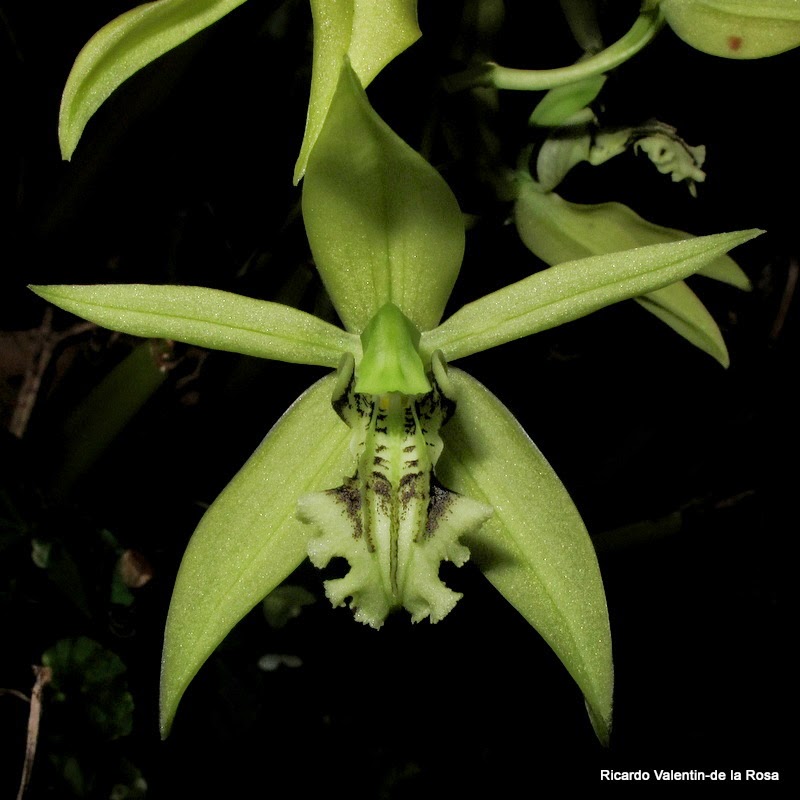
Coelogyne parishii Hook. f. 1862, a specimen plant


In the Puerto Rico orchid society show in San Juan in 2010, this plant won best specimen plant and also was awarded a CCM/AOS of 86 points.  This award recognizes the superior culture of an orchid.  I gave it the clonal name "Juan A, Rivero".   Professor Juan A. Rivero, or the University of Puerto Rico at Mayaguez,  gave me a two pseudobulb piece of this orchid the first time I visited his garden, in 1984.  This plant has been thriving under my care since that time.  This orchid tendency to produce two leads in each new growth allows it to become a large specimen plant in a relatively short time.  At the moment it was awarded it had 254 flower.  In 2011 it also produced a large quantity of flowers but I had to cut the leaves since they were in a lamentable state, probably due to unusually sunny and dry conditions in my garden.

Tuesday, May 6, 2014

Dendrobium Nestor, (Den, anosmum x Den, parishii)


I got this plant about twenty years ago.  Back then Den. Nestor was something of a rarity.  This plant has an interesting combination of traits of its parents.  The soft color is similar to the most common forms of Den. anosmum.  The lip is very hairy, a characteristic of the lip of Den. parishii.  Den. Nestor has been remade many times with different parents.  The forms that seem to be most popular nowadays are deeply colored and have a shape that is reminiscent of the Den. anosmum parent.  I have seen plants of Den. Nestor being sold as Den. anosmum.  If the plants are inmature it is not that easy to tell apart the hybrid from the species.  However you can tell adult plants of anosmum from the hybrid due to thecomparatively larges size and flowers of anosmum.

Dendrobium anosmum

Dendrobium parishii

Wednesday, April 20, 2011

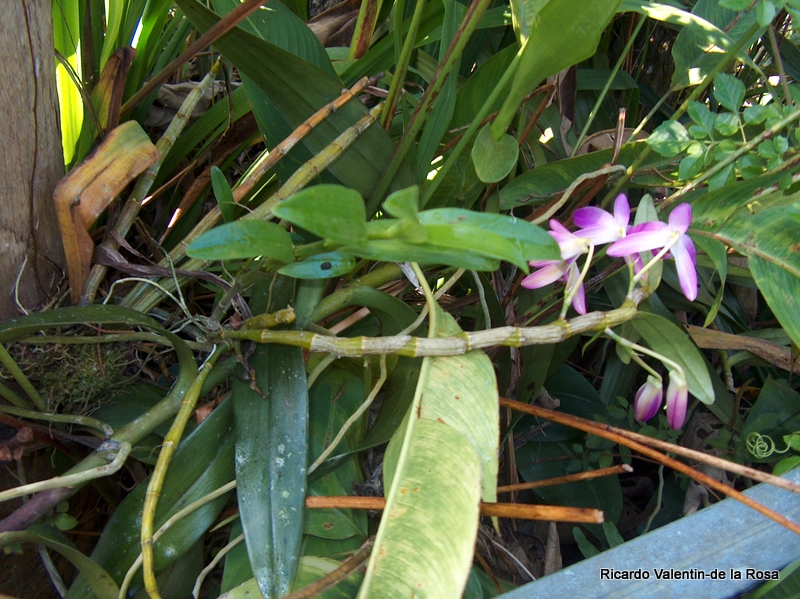
Dendrobium parishii a small orchid from the deciduous forest of Asia


This plant is relatively well bloomed for a local plant

A more typical few flowered blooming, note the hairy lip that is characteristic of this species

A hybrid between lodiggesii and anosmum, this one has a particularly wide lip and a delicate color.  Small and deeply colored forms of this hybrid, Den. Nestor, are sometimes confused with parishii


This species is native of a wide band of Asia, it can be found from the Assam region of India to China, Thailand, Myanmar, Laos and Vietnam.  It grows grows in deciduous forest that undergo seasonal variations that dictate a wet and cloudy summer and a dry and sunny winter.  This variations in water availability and light intensity are said to promote better blooming when some effort is made to replicate them in captivity.  The flowers have a powerful, pleasing fragrance.
This Dendrobium seems to grow poorly locally.  Most of the plants I have seen on display are literal dwarves when compared with similar plants grown in more temperate climates.  In my own experience this is a plant that is difficult to keep and can be prone to rot if put in a growing media with poor aireation.  None of my plants have produced canes that have reached more than five or six inches.  However when grown in well drained media or in a plaque of cork or fern the plant can be problem free.  It has also grown relatively well in very small pots that have good drainage.  One of my best plants was grown on a two inch pot for several years with little complaint.
The canes can be straight or arching, I have had plants that have grown both ways.  It responds well to daily watering and heavy fertilization during its growing season.   However it can be perceived as a frustratingly slow grower for those of us accustomed to plants such as anosmum and cucullatum which can grow a five to seven feet cane in a single season.
This plant is very common in horticulture and even the most cursory Internet search can reveal several growers that have it for sale at very affordable prices.  Locally I have seen this plant only on the collections of the more experienced hobbyists.  It is not clear if the relative rarity of this species locally is because the more experienced hobbyists are the only ones that are interested in it or whether they are the only ones that can keep it alive for an extended period of time.

Wednesday, March 30, 2011

A small pendent Dendrobium hybrid, Dendrobium Adastra x Den. parishii


Dendrobium Adastra x parishii
Dendrobium Adastra
Dendrobium anosmum
Dendrobium cucullatum
Dendrobium parishii
I brought this small Dendrobium hybrid at a huge Spring orchid show in 2009 that was held at Plaza Las Americas, the largest Mall in the Caribbean.  One interesting feature of these shows is that every year a few new and interesting plants are brought in, sold in quantity, and then never seen again for sale.   Because this has happened a number of times I am always on the lookout for orchids that I know are rarely exported.  This little Dendrobium is one of those rare and exciting finds.
This little plant combines the genome of three of the most outstanding species of Dendrobium of the section Dendrobium.  This orchid is the result of the cross of Den. Adastra (anosmum x cucullatum) and Den. parishii.   It is interesting to note the flower of this hybrid doesn’t resemble too closely any of the parents and has a unique charm all of its own.  One surprising characteristic of this plant is its small size.  The canes of my plant are between 12 and 15 inches long, pretty small considering than a local anosmum can easily produce five foot canes and I have some clones of cucullatum reach more than six feet long with ease.  It appears that the influence of the parishii parent has resulted in a reduced cane length in this hybrid.  But I must confess the size of this plant might have also been influenced by the way I culture it. 
One vexing problem I have had with parishii derived hybrids is their vulnerability to cane rot under my local conditions, something that also plagues my parishii plants.  However not all my parishii hybrids are equally affected, those that are in baskets with excellent drainage fare the best, those in pots fare poorly.  Because I didn’t want to lose this plant to rot I put it in a tiny basket with just enough moss to give the roots something to hold but not enough that it would stay sopping wet for hours.  As a result the root ball of this plant is comparatively puny for its size.  But since after three years under my care it has now shown itself to be quite hardy I plan to move it to a larger basket where it will be able to develop a larger root ball.  Unfortunately it has shown no inclination to produce two canes at the same time as anosmum sometimes does and its quite stingy producing keikis having produced just two so puny that I will wait until they have two canes to remove them.
As far as culture goes I grow them like I grow my anosmum except that this one is kept in a shadier location until I have more plants and can test them for resistance to several hours of full sun exposure.  Indications on growing anosmum are located elsewhere in this blog, a link can be found at the bottom of this blog page.   Compared with Adastra, anosmum and cucullatum this orchid is a relatively slow grower.  The canes sometime have slight sidewise twists, an odd feature that none of the parental species show under my care.
The flowers of this hybrid have a better shape and presentation than the flowers of any of its parents and the pink color is outstanding.  But sadly they are not scented and they are produced in limited numbers.  The relative small flower count might be due the way I grow it so the flower number will probably increase significantly if I expose it to more sun but that will be tested in the future.   Personally I would love to see a flower with the shape and color of this one but with a size comparable to the flowers of anosmum which can be four inches wide.  I sometimes wonder what would come out if someone would cross this plant with Dendrobium primulinum var. giganteum which has an enormous lip with a spectacular orange coloring in the center.  Alas it is a fantasy at this moment but, you can always dream!

Thursday, February 17, 2011

Dendrobium anosmum and its relatives, the rest period as a tool to promote abundant blooming


Dendrobium primulinum stems at the tail end of the growing season

The same plant as above after two months of no water or fertilizer and exposure
to bright light.
Dendrobium Adrastra blooming from leaveless canes

A properly rested plant of Den, anosmum with more than forty buds in a single cane.  Note the blooms are produced all along the lenght of the stem and not just near the tip
A relatively young Den. primulinum plant, note that stems are plump and still have the remains of a few leaves.  See below the plant in full bloom.


Giving your Dendrobium a rest period can be the difference between an impressive and abundant floral display and one that produces just a few blooms.  Species of Dendrobium of the group that includes  anosmun, primulinum, cucullatum, nobile and parishii among others flower best when given a rest period that mimics the seasonal conditions that are the trigger for blooming in their native haunts.
What is the nature of the seasonal rest period in this particular group of orchids?  These Dendrobium live in the south east of Asia and in parts of India.  In these regions they are subjected to the monsoon weather system.  In the summer there is abundant rains that fuel the growth of their long pendent canes.  But as winter approaches the rain diminishes considerably and eventually ceases for some months.  The constant cloudiness of the monsoon season is then substituted by clear sunny skies.   As the rain ceases the trees lose their leaves and the Dendrobium are exposed to high levels of sunlight.  Finally as the dry season starts the Dendrobium lose their leaves and enter the dry season as a bundle of stems that not in the least resemble their lush rainy season appearance.
Generally, but not in every geographical region, the dry season is also a season of lower temperatures.  The combination of high light conditions, drought and low temperatures is said to prime the buds of the stem of many Dendrobium for flowering. That means that the seasonal change is the cue that makes the vegetative buds that are all along the stems turn into flower buds.   When orchidists talk about giving their plants a rest period they are referring to the set of circumstances in the natural habitat of the Dendrobium that I have outlined in the preceding paragraphs.
Personally I stop all fertilizing and watering in November.  This means that the media of some of my plants will become bone dry and stay that way sometimes for several weeks.  All my pendent Dendrobium tolerate these lengthy dry spells with little complain, probably because even thought they are not getting any water the environmental humidity is high enough to prevent severe shriveling of the canes.  However I do have to confess that if I see a plant becoming excessively wrinkled from desiccation I do water it lightly.
 Although these conditions might seem severe and some of these pendent Dendrobium will flower quite well without experiencing the most severe rigors of the rest season other species will not produce flowers if not given a distinct rest period.  The best example of an orchid of this group that grows very well and yet blooms poor in the tropics is Dendrobium nobile.  If maintained under constant warm conditions, fertilized all year and kept under shady conditions most nobile will bloom poorly and may not bloom at all.  
Some orchidist just can’t resist the urge to water and give fertilizer to their plants year round. These orchidists generally have a tough time getting blooms out of them.  I have seen massive nobile specimens that have never produced a single flower.  I once brought a large plant for the ridiculous amount of $15.00 because the garden store owner had become tired of waiting for it to bloom and felt the plant was taking too much space and not bringing any profit.   I gave this plant a proper rest period and the plant responded by producing 150 large and fragrant flowers in about twenty canes.  All those canes that had accumulated without blooming for years produced flowers all at the same time.
I know some people keep watering their plants even in the rest period and that some of those plants bloom from canes that have kept their leaves.  But so far I have not seen a plant that has kept its leaves bloom as abundantly as one that has lost all its leaves due to the stress of the rest period.

Wednesday, January 12, 2011

Dendrobium anosmum and their relatives, warning signs of cultural trouble


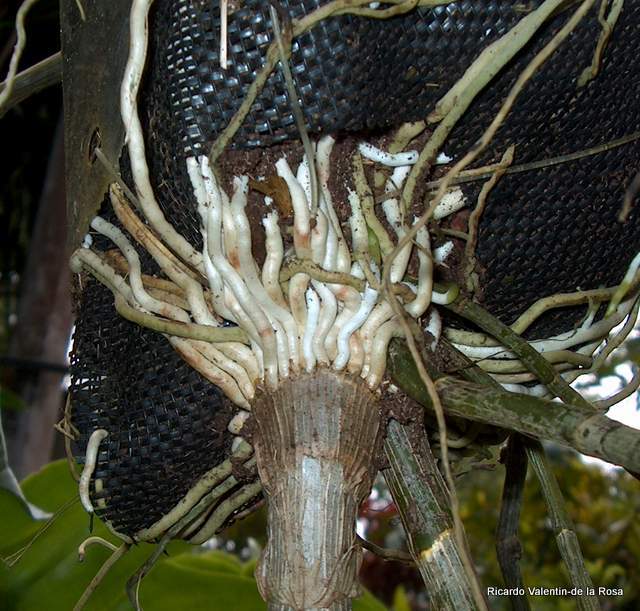
Vigorous and healthy root growth, note that the cane producing the roots is twice as thick as the previous growth

New roots are white older ones are grey green, absence of root growth is a clear signal of trouble


Fungal and bacterial infections can strike with astonishing speed and virulence, this is all that remained of a specimen plant of Dendrobium formosum var. giganteum.  If the gravity of the situation had been recognized on time at least some pices would have been saved for propagation

This Dendrobium nobile has been growing for many years in an avocado tree under hot tropical conditions.  It has never bloomed although in all aspects it is mature plant fully capable of blooming.

Dendrobium nobile blooming in a shady and cool location.

A Dendrobium phalaenopsis derived hybrid which lost all its roots due to inappropiate potting, all the old roots are dead but some new roots are showing their tips near the base of the canes.

The buds at the base of this canes are dead so the plant is producing new growths from buds higher up in the cane.

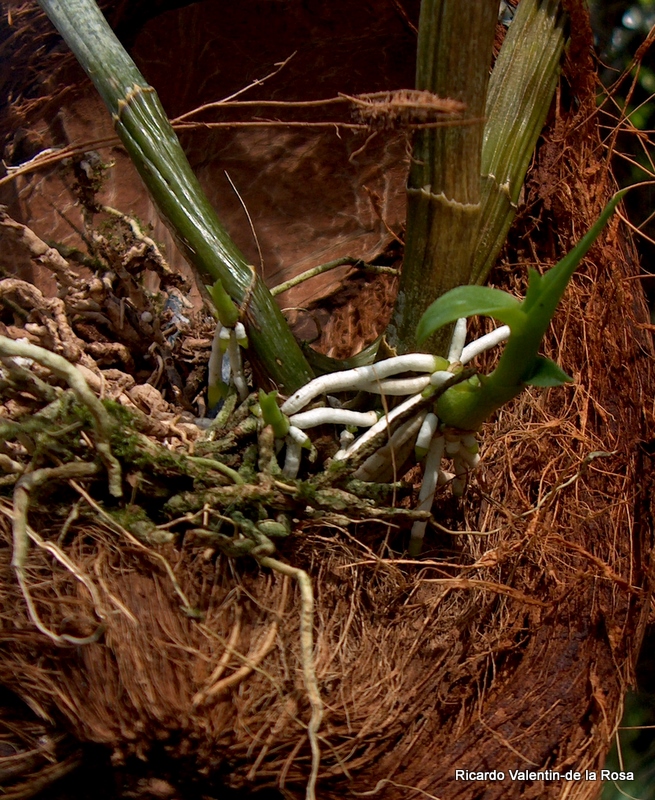
The base of these canes of Den. primulinum was damaged by sunburn and died.     The canes were bent so that the keikis produced by them can attach themselves to the basket.  Notice the many keikis and their abundant root growth.

Den. phalaenopsis hybrid grown with its roots exposed.  Note the abundant flower production and the fully leafed new cane.  It is normal for older canes to lose their leaves after the first year.


Under good care some keikis will bloom even when they are not affixed to anything


When they are growing at their preferred temperature and lighting range, well cared pendent dendrobiums grow vigorously, without any particular trouble and bloom reasonably well. But when they are grown under conditions that are unsuitable for them several things happen that serve as a warning signs that the plant is not doing well. I will detail some that I have learned from the bitterest experience. This is a work in progress and I will try to add information as time permits.

I. When your plant needs a colder rest period to bloom than you can provide.

If a plant needs a colder rest period to bloom but otherwise the conditions are to its liking you will get an endless production of handsome canes, which will be plump and healthy but will never bloom or even get in bud. Because circumstances prevent them from blooming these plants channel their energy into growth and can produce quite large plants. One Den. chrysanthum I have eventually produced a ten feet long cane. This particular plant has never produced even a single bud under the local climatical conditions. Dendrobium nobile will not usually bloom in coastal Puerto Rico but will bloom nicely if moved to locations about a 1,000 feet high in the mountain areas and in certain colder inland areas. There are plants here and there that bloom under conditions that are not in their usual preferred range but usually they do so erratically or poorly.

II. When the temperature is not in the preferred range for growth.

The first signs of trouble in this case is usually a lack of root growth. Unfortunately some pendent dendrobiums can survive for many years growing weakly and with root systems that barely sustain whatever meagre growth they manage. It can happen that the plants perk up and do produce good growth during brief times when conditions are to their liking, but as soon as temperatures drift out of their preferred range the plants weaken again. I brought a Den. falconeri that managed to survive ten years by growing acceptably during the brief weeks that local temperatures dipped and then sulking the rest of the year. Strenuous efforts to sustain this plant only lengthened the agony. Eventually the plant dissolved into a mass of tiny canes and diminutive keikis that were too weak to survive the summers heat. Keiki production on a a same year growth is also a very bad warning sign. It usually means that the plant inability to produce roots has made it transfer its energy to keiki production.

III. When it is not getting enough sunlight

If your plant is not getting enough sunlight to bloom properly you will probably get a few blooms right on the tip of the cane. A plant that might produce dozens of blooms might only produce two or three. The canes themselves might get to be abnormally long and thin. The leaves will have a deep green color.

IV. When roots are not entering the potting mix, or holding the mount.

This probably mean the mix is unsuitable for the plant because it has some characteristic that is inhibiting or killing root growth. A friend of mine accidentally killed many of his orchids by mounting them on the wood of a plant whose wood is permeated by a substance this plant secretes to kill other plants that  might compete with it for food or sunlight.  

V. A growth coming from a cane other than last years cane, if last year cane doesn't grow.

It probably means that the base of its newer cane is dead and the plant is trying to keep alive by producing growths elsewhere. In some plants, (this is an specially insidious occurrence in pendent dendrobiums) a cane that has shed its leaves can continue attached to a dead base without any obvious signs of distress for months before decay reveals that the base is dead.

VI.When a cane suddenly stops growing in the middle of producing a new leaf.

Usually means that something has severed the connection between the growing tip and the base of the plant. I have seen this happens when an insect gnaws the middle of a cane and makes a cavity but leaves it mostly attached to the base on the sides of the cane. This can cause the death of the whole cane, not just the tip.  On some ocassions this can signal a bacterial or fungal infection of a stealthy nature that only becomes obvious when the cane starts to decay rapidly at a time when it should have been growing.

VII. Blackened and sunken areas between the base of the plant and the lower part of the cane.

Can mean sunburn to this area, can result on the death of the plant but the survival of some of the canes.

VIII. Profuse keiki production on plants that normally produce them sparingly.

A sign of root loss, or of loss of the buds at the base of the plant.

IX. A weaker cane than the previous year's cane.

Plant is not getting what it needs to grow well, common in newly repoted plants that have suffered severe root loss and plant adjusting to new environments.

All this information is courtesy of the need to unwind after an unexpedtedly streesful day at work.

Wednesday, December 1, 2010

Fragrant Dendrobium, ideal for a perfumed tropical garden


Dendrobium anosmum, all plant of this species I have grown are capable of producing the strong sweet fragrance characteristic of this species, the scientific name, anomum, which means without fragrance, must have been given by an anosmic individual!  This species when well bloomed can produce a powerful fragrance that can be clearly smell from many feet away.
 I have grown Dendrobium orchids for many years and it is one of my favorite orchid genera. Of the Dendrobium, the ones I like best are the fragrant species and hybrids. In the following article I will share details on the species and varieties I have grown, on their fragrances and on the particular quirks that the various species have exhibited under my culture.


Many years ago, in a book whose title I can’t remember, I read about a circular garden that was divided in six parts. Each part of the garden was devoted to a different sense. The garden had five wedges, where all the wedges converged in the center there was another circle, this one devoted to the sixth sense, intuition, and planted with only with golden flowers. This garden captured my imagination, but unfortunately I could not make one. My work as a wildlife biologist has meant that I have lived either in urban areas near universities or deep in protected forests, in these places this type of garden was impossible. But in these settings orchids allowed me to enjoy delightful fragrances, lovely colors and interesting shapes without the need of large spaces, digging, or modifying the landscape in any significant way. Orchids had also the virtue of portability, when I moved, (something that has happened several times during my career), I just took them with me with little problem.


Of all the orchids I have, the Dendrobium represent the best combination of ease of culture, resistance to pests and consistent flowering. This didn’t happen by chance, I did my homework and tried to acquire those species that were best suited for my climatic conditions. Getting the information on the cultural needs of the particular Dendrobium you want to grow is very important as some species need a certain degree of seasonal variation of temperature and moisture to stimulate the buds in the cane to change from the vegetative to flowering mode. Pest resistance is important to me as I don’t want to have to continually use pesticides just to keep my plants in good condition. I do use pesticides but on spot applications and not as preventive measures. In respect to consistent flowering, taking care to give the plants the proper culture they need goes a long way toward achieving regular flowering even on plants that are sometimes labeled as difficult. I suspect that some of the difficulties faced by growers getting their plants to bloom may have to do with growers trying to grow them under conditions that are not really suited to that particular species.

I grow my orchids outside, in a terrace and in a shade house. I live near the central mountain range of Puerto Rico at an altitude of 1000 feet (350 mts), near the center of the Rio Abajo State Forest, where I work. The local temperatures range from 60F (16C) at night at the peak of winter to 90F at daytime in the height of summer, daily temperature variation is about 10 to 15 degrees. There are just two seasons, a dry and a wet one. Humidity fluctuates most of the year between 70 and 80% but varies from 40% during the day at the peak of the dry season to close to 100% at night during the rainy season. The plants are watered weekly during if it doesn’t rain. The plants are regularly watered during the dry season with the exception of those that need a seasonal dry spell. The plants receive fertilizer only when they are growing. Some effort was made to find the optimal sun exposure for each species. It was found that most bloom much better with several hours of exposure to full sunlight in the morning.

Dendrobium anosmum alba, small flowered, small lipped clone

Dendrobium anosmun var. huttoni

The most common type of Den. anosmum is also the most floriferous, it is capable of producing more than sixty flowers on a single cane

Den. anomum variety from Thailand, the flower is suspiciously similar to Den. Nestor but the canes are unique and not similar at all to those of Nestor

Den. Nestor clone, favoring the anosmum parent, but note the fuzzy lip that betrays the parishii ancestry, at time sold as anosmum, all Nestor I have grown have the sweet fragrance associated with anosmum
A Den. Nestor that favors the parishii parent

A Den. Nestor that is quite distinct from most other forms hybrid

A very small lipped form of Den. Nestor with very thick textured flowers

In the front, Den. farmeri var. albiflorum, an outstading clone of this type, in the background a typically colored form. The fragrance is faint but clearly felt when there are many flowers

A flower of Den. farmeri albiflorum

Den. farmeri, a faint fragrance
Dendrobium harveyanum, formerly an extremerly difficult to find species, a slight honey fragrance

Den. crumenatum, powerfully fragrant at certain times of the day
Den. parishii, delightfully frangrant with a sweet note

Den. chrysotoxum, a sweet slight honey fragrance

Den. fimbriatum var. oculatum, a sour citrical fragrance

Den. nobile, a slight sweet fragrance

Dendrobium moschatum it has complex fragrance delightful to some, unpleasant to others

Dendrobium spectabile it has a complex fragrance sweet to some, to others like crushed stinkbugs